
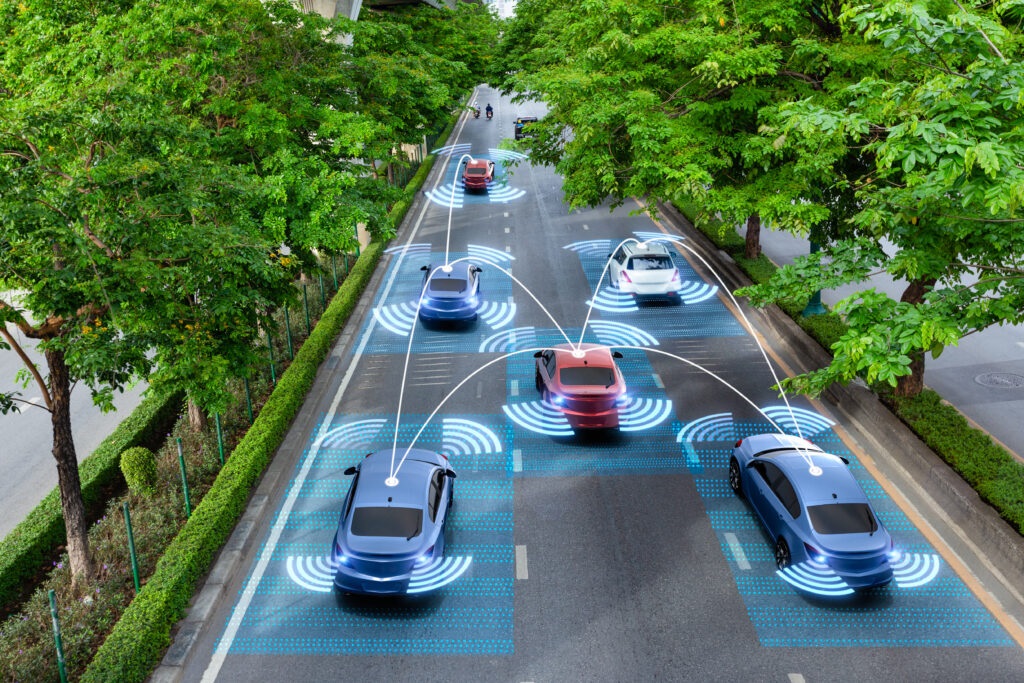

The widespread use of electric vehicles (EVs) is one of the most revolutionary measures to reduce carbon emissions. Since transportation contributes significantly to global greenhouse gas emissions, switching to electric vehicles (EVs) from fossil fuel-powered cars and trucks is a strong step toward sustainability. To facilitate this shift, governments and private businesses are making significant investments in EV infrastructure, such as smart grids and charging stations. When driven by renewable energy sources, electric vehicles (EVs) significantly reduce carbon footprints in cities and transportation networks and emit zero exhaust emissions.
Smart Traffic Management for Emission Reduction
Urban congestion wastes gasoline and emits carbon. Smart traffic management systems reduce inefficiencies by monitoring and regulating traffic flow in real time using sensors, cameras, and AI algorithms. These systems prioritize public transportation, dynamically change traffic signals, and direct cars away from congestion to reduce idle time and increases fuel economy. Smart traffic control lowers stop-and-go traffic, which reduces car emissions and travel time, making it crucial to sustainable transportation.
Real-Time Route Optimization for Freight and Passenger Transport
Smart transportation also requires real-time route optimization. This technology employs GPS, machine learning, and data analytics to find the best routes based on traffic, road conditions, and weather. Delivery and logistics organizations save a lot on emissions, operational costs, and fuel with route optimization. Apps that suggest alternative routes or public transit may lessen commuters’ environmental impact. Route optimization ensures cars spend less time on the road, reducing carbon emissions globally.
Promoting Multimodal and Shared Mobility
Strategies that promote the use of shared and multimodal mobility solutions, such bike sharing, ridesharing, and public transit system integration, are also included in smart transportation. These choices lower overall emissions by reducing the number of single-occupancy vehicles on the road. Travellers may easily plan and pay for excursions including several modes of transportation with the use of mobile apps and data platforms, which increases the convenience and attraction of eco-friendly travel. Intelligent technologies can greatly reduce transportation-related emissions in densely populated areas by promoting such behavioural adjustments.
Data-Driven Policy and Urban Planning
The ability of smart transportation to support data-driven policy decisions is arguably one of its most significant features. Mobility data can be used by governments and cities to enforce sustainability policies, create low-emission zones, and upgrade public transportation and EV infrastructure. This focused strategy makes it possible to invest more in environmentally friendly transportation options and monitors the advancement of climate goals.
Conclusion
Combating climate change requires intelligent transportation. These ideas offer workable approaches to reduce carbon emissions through shared mobility solutions, intelligent traffic control, optimal routing, and EV integration. A cleaner, greener future can be ushered in by smart mobility when combined with data-driven policy and sustainable planning.