
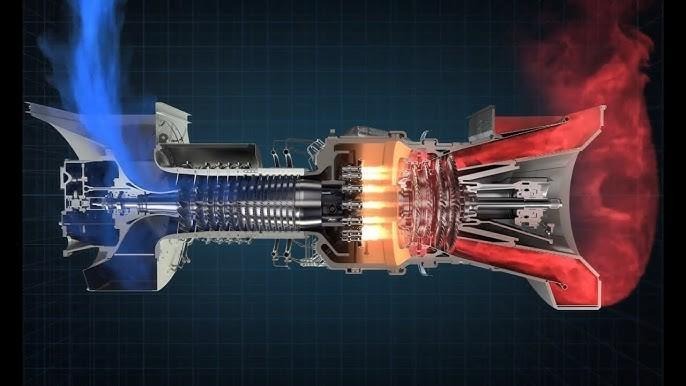

It may surprise you to learn that minimizing a single unscheduled GT outage can save hundreds of dollars. Especially in repairs and lost output.
Effective turbine maintenance advice is more important than ever. This demonstrates how important proactive equipment care is in increasing the lifespan of GTs.
The Importance of Component Longevity
Oil and gas, as well as power generation, depend on industrial GTs. Extreme thermal, mechanical, and environmental stress is placed on parts. Such as blades, fuel nozzles, vanes, combustion liners, and transition pieces.
Maintaining these in good condition is essential to increasing the system’s total lifespan. Thus, guaranteeing continuous operation.
Utilizing industry-leading repair and refurbishing techniques. That’s what experienced turbine component repair providers employ.
Tips to Boost Component Life
The secret is to take a methodical, preventative approach. The following tried-and-true turbine maintenance advice can help prolong component life:
- Plan on doing routine inspections.
To detect wear, corrosion, or cracks early, perform comprehensive, routine inspections of crucial parts. Such as combustion liners, nozzles, blades, and seal housings.
- Allow for precise repair and machining.
Instead of replacing parts when damage or wear occurs. Employ precision techniques like welding, machining, and grinding to restore them. These techniques prolong component life at a reduced cost while maintaining engineering tolerances.
- Restore the tip and trailing edge.
Utilize tip repair to fix damaged bucket or blade tips, and if required, utilize trailing-edge solutions. This is to restore worn portions and maintain aerodynamic efficiency.
- Create a proactive lifecycle strategy.
To minimize downtime and preserve component health. Create a strategic maintenance schedule with contingency planning. Just to make sure repair or replacement resources are available. Especially during scheduled outages.
- Consider refurbishing parts rather than replacing them.
Refurbishing parts can save a lot of money. You can restore them to almost OEM quality, cut waste, and preserve system dependability.
- Make use of sophisticated NDT, or Non-Destructive Testing.
Use techniques like eddy current, liquid penetrant, magnetic particle inspection, ultrasonic, and X-ray. They are intended to find hidden defects before components cause failure. Click https://inspenet.com/en/articulo/introduction-to-non-destructive-testing/ to learn more.
- When feasible, use predictive analytics.
Preemptive intervention is made possible by the use of performance data and trends. This is to predict degradation before conventional indicators show up.
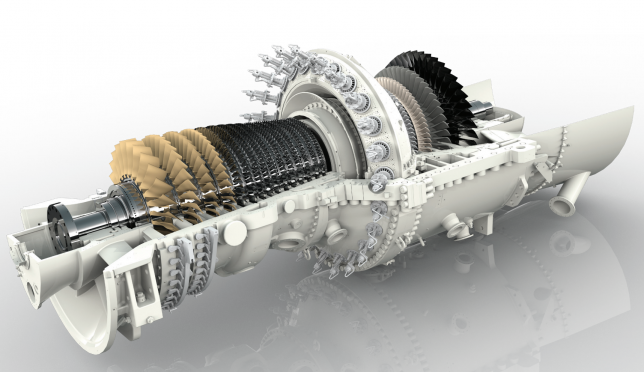
A Comprehensive Strategy for Maintaining Turbine Health
In addition to increasing the lifespan of gas turbines. A proactive maintenance approach that incorporates testing, inspection, precision repairs, refurbishing, and predictive planning. It also directly reduces the likelihood of unanticipated failures.
Turbine performance is maintained, and operational resilience is supported. This is achieved by beginning with robust diagnostic procedures and continuing with clever repair techniques.
Performance-Influencing Factors
One type of active internal combustion engine is a GT. Since the vapor and its conditions are set. It is instantly clear that steam turbine performance is much simpler to calculate. Especially when compared to gas turbine performance.
The fuel type and atmospheric conditions affect the vapor state of a GT. This is because the gas turbine engine receives its input from the environment – find out more on how standards protect the environment. And any variation in temperature, humidity, or pressure will impact the mass flow into the GT. And, in turn, the power it generates.
The performance of the GT must be stated by means of heat rate, thermal efficiency, BTU/kilowatt hour, and fuel rate. That’s because the vapor conditions are changing. Additionally, all of the aforementioned needs to be stated in standard language. The International Standards Organization, or ISO, has created a set of uniform requirements for rating all gas turbines.
Air environmental conditions and input air density have a direct impact on GT site performance. Inlet air density has the following implications on generated power and heat rate:
- The air volume flow rate is limited by an engine design.
- The mass flow of air and the actual energy collected per pound of gas determine the produced power.
- As a result, for a certain engine, generated power changes in exact proportion to the incoming air density.
- Low volume flow does limit the amount of power that can be produced.
When choosing gas turbines, care must be taken into consideration. This is to guarantee that there is enough shaft power available in high temperature. As well as fouled intake circumstances. Additionally, because gas turbines are not custom designed like steam turbines. Their applications are typically fully loaded.
Conclusion
Elevation, temperature, fuel conditions, inlet and exit conditions, and humidity all affect GT site power. Verify the accuracy of the fuel gas analysis and the surrounding temperature circumstances at elevated sites. Also, the correctness of all site characteristics during the design process.
Verify that the expected conditions are accurate by speaking with other local end users.
Using integrated turbine maintenance advice is the key to extending the lifespan of gas turbines. It is based on prompt diagnostics, accurate repair, and astute planning. It goes beyond reactive fixes.
Plant operators may ensure improved performance, reduced expenses, and extended turbine life. That is by employing data-informed maintenance planning, utilizing NDT, and prioritizing repairs. In addition to refurbishments and conducting frequent inspections.