
Everything You Should Know About Magnetic Particle Testing
Magnetic particle testing or as other people call it inspection is the NDT or non-destructive testing method specifically used to identify near surface and surface flaws within the ferromagnetic materials.
The main idea is taking advantage of magnetism principles, which will help you detect specific discontinuities like seams, cracks and inclusions that could compromise the integrity of metal components. We recommend you to click here to learn more about these turbines.
It will help you reveal the smallest defects, meaning it is crucial for industries such as automotive, aerospace and construction, where safety and precision are important. During the core of MPI, you probably understand that we are talking about magnetization as the process.
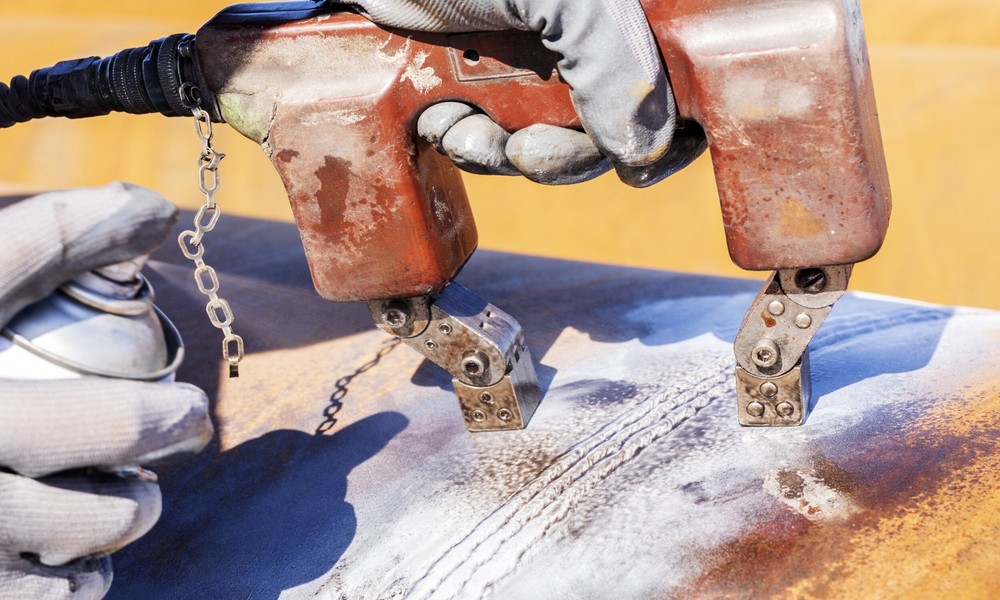
As soon as the component reaches a magnetized size, magnetic flux lines are flowing through it. In case a flaw disrupts the flow such as void and crack, which means the magnetic leaks can defect the site. If you wish to visualize the leakage, inspectors apply ferromagnetic particles, which can be suspended or dry to the surface.
These particles cluster at the flux leakage points, meaning you will form visible indications to highlight the overall shape and location. The method can help you reach the desired hairline cracks, which are invisible to the naked eye, while you boost overall accuracy and maintenance.
MPI is effective for detecting surface-breaking issues, and even the ones that are below the surface. Compared with radiography and ultrasonic testing, we may struggle with subtle surface defects, meaning you can provide clear and immediate results.
The technique is specifically effective at identifying weld defects, fatigue cracks and stress corrosion cracking, which is a common issue within loaded components. Proper direction of magnetization, which can be circular, longitudinal or multidirectional, can boost sensitivity while ensuring defects of various orientations depending on your preferences.
Although methods such as PT, or penetrant testing and ECT or eddy current testing are also popular for surface inspections, magnetic particle inspection comes with numerous benefits. For instance, PT is effective for detecting surface flaws, whereas MPI identifies near-surface defects.
Compared with ECT, which is specifically limited to materials, MPI works on metals but you will get faster results with minimal preparation. At the same time, MPI comes with reliance on fluorescent and visual particles under UV light, which creates a considerable contrast, while reducing the risk for missing flaws during inspection for further maintenance.
MPI comes with precision, which makes it perfect for high-stake components such as structural welds, engine parts and pipelines. When it comes to aerospace, it will help you ensure turbine blades and landing gear, which are free of defects and may lead to failure issues. Automotive manufacturers rely on MPI to determine the quality of suspension components and crankshafts.
At the same time, gas and oil industries are using it for pipeline integrity. When you decide to catch flaws early, MPI can help you prevent expensive downtime while you can ensure compliance with standards.
Benefits of Magnetic Particle Testing
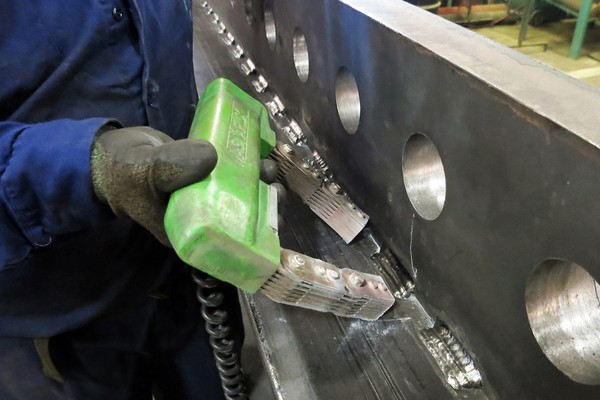
You should remember that MPT excels at determining the surface-breaking cracks, other discontinuities and seams that are smaller than 0.1 millimeters. The main idea is that you can magnetize the test object and apply iron-based particles. That way, defects can become more visible under reliable lighting.
The sensitivity is essential for detecting flaws that can affect structural integrity, which will provide you with peace of mind. Compared with other non-destructive methods that require preparation, MPT is effective because you will get fast results. The process involves magnetizing the component, applying particles and inspecting defect indications.
The speed can help you ensure high efficiency and reduce downtime, which is crucial in the power industry. MPT can help you deal with the inspection with minimal specialized equipment compared with other options such as ultrasonic testing and radiography. The essential tools include magnetic particles and a magnetizing device, which are affordable.
It means you can get it for both large and small operations. At the same time, you will ensure fast turnaround that will reduce labor expenses, meaning you will get a higher return on investment. You should remember that MPI functions on any material that features ferromagnetic characteristics including cobalt, iron and alloys.
It can help you adapt to complex shapes from castings to welds to machined parts. It does not matter whether you are inspecting engine components, pipelines or structural steel; MPI is effective because you can ensure the process without damaging the material. Check out this guide: https://docs.nrel.gov/docs/fy11osti/50586.pdf to learn more about gas turbines.
Another important consideration is that defect indications are visible in real time during inspection, which allows technicians to make decisions in real-time. The immediacy can contrast with methods such as liquid testing, which requires plenty of time. For critical applications, fast identification of problems can prevent delays and allow you to get approval as soon as possible.