
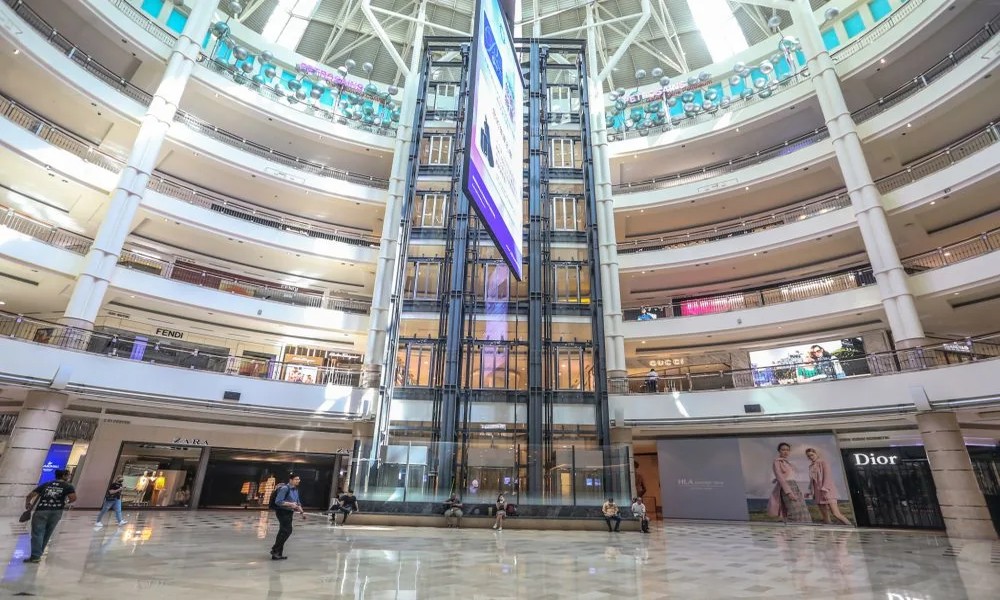

Walk into certain shops or cafés in Kuala Lumpur, and you’ll notice something interesting.
They’re busy. Sometimes, even a bit crowded. People are moving around, tables are full, there’s noise, activity, energy.
But it doesn’t feel chaotic.
In fact, it feels… intentional. Controlled. Even enjoyable.
And more importantly, these spaces tend to perform well. They attract customers, keep them engaged, and generate consistent revenue.
So what’s going on?
It’s not luck. Its design.
Here’s how smart commercial interior design turns “busy” into something profitable instead of overwhelming.
1. There’s a clear flow, even when the space is full.
The biggest difference between a busy space and a messy one is flow.
In well-designed commercial interiors:
- Movement paths are clearly defined
- Entry and exit points are unobstructed
- Customers instinctively know where to go
Even during peak hours, people can move without bumping into each other or feeling stuck.
In poorly designed spaces, the opposite happens. People hesitate, stop abruptly, or crowd certain areas, which creates frustration.
In many high-traffic spots across Kuala Lumpur, good flow design is what keeps a packed space functioning smoothly.
2. Zoning keeps activities from clashing.
A profitable, busy space doesn’t try to do everything in one area.
Instead, it separates functions into zones:
- Ordering areas
- Seating areas
- Waiting zones
- Display sections
This prevents overlap.
For example, customers ordering don’t block those who are seated. People waiting don’t disrupt those browsing.
When zones are clearly defined, the space feels organised even when it’s full.
3. Visual hierarchy guides attention.
In busy environments, people rely on visual cues to navigate quickly.
Good design uses visual hierarchy to guide attention:
- Brighter lighting on key areas (like counters or displays)
- Clear signage and focal points
- Strategic placement of products
This reduces confusion.
Customers don’t have to think too much about where to go or what to do next. The space “tells” them.
In contrast, poorly designed busy spaces feel overwhelming because everything competes for attention.
4. Density is controlled, not random.
Crowded doesn’t always mean uncomfortable.
In well-designed spaces, density is planned:
- Tables are spaced to maximise capacity without blocking movement
- Walkways are protected from encroachment
- Seating arrangements consider both privacy and efficiency
This allows businesses to fit more customers without making the space feel suffocating.
In many commercial spaces in Kuala Lumpur, this balance is what directly impacts profitability-more people served, without compromising experience.
5. The environment encourages faster decisions.
Busy, profitable spaces often reduce decision-making friction.
They do this by:
- Displaying products clearly
- Simplifying menu layouts
- Highlighting bestsellers or promotions
When customers can decide quickly, turnover increases.
This is especially important in high-traffic areas where efficiency matters.
If customers feel overwhelmed or confused, they take longer-or worse, they leave.
6. Comfort is maintained even at high capacity.
Here’s something many people overlook: profitable spaces don’t sacrifice comfort entirely.
Even when busy, they maintain:
- Adequate ventilation
- Manageable noise levels
- Comfortable seating proportions
It’s not about making the space luxurious-it’s about preventing discomfort.
Because once people feel physically uncomfortable, they start looking for reasons to leave.
7. Energy is designed, not accidental.
Some spaces feel lively in a good way.
Others feel stressful.
The difference comes down to how energy is managed through design:
- Lighting levels that match activity
- Materials that absorb or reflect sound appropriately
- Layouts that prevent overcrowding in one spot
In successful commercial interiors in Kuala Lumpur, this “energy balance” is carefully controlled.
The goal is to feel active and vibrant, not chaotic.
8. The space subtly encourages spending behaviour.
Good design doesn’t just manage movement-it influences behaviour.
For example:
- Product placement increases visibility of high-margin items
- Seating layouts encourage longer stays (and more orders)
- Strategic pathways expose customers to more offerings
Even in busy environments, these subtle cues continue working in the background.
That’s why some crowded spaces still perform well financially-they’re designed to convert traffic into revenue.
9. Staff workflow is just as important as customer flow.
A common mistake is designing only for customers.
But profitable spaces also consider staff movement:
- Efficient kitchen or service layouts
- Clear pathways for staff to move quickly
- Minimal overlap between customer and staff traffic
When staff can work smoothly, service becomes faster and more consistent.
And in busy environments, speed and efficiency directly impact how many customers can be served.
Final Thoughts
Busy commercial spaces aren’t automatically successful.
Without proper design, they become stressful, confusing, and inefficient.
But when interior design is done right, “busy” becomes an advantage.
It creates:
In Kuala Lumpur, where competition is high and space is valuable, this is what separates thriving businesses from struggling ones.
Because in the end, profitable spaces aren’t just filled with people.
They’re designed to handle those people well.